Dry, flaky skin can leave your dog itchy, uncomfortable, and determined to scratch, lick, or nibble at the same spot. When you can see flakes through their coat or notice their skin looking dry and irritated, you’re likely to wonder what’s causing it and how you can help.
The tricky part is that dry skin isn’t caused by one single problem. Everything from allergies and parasites to environmental changes can affect your dog’s skin, so understanding what’s behind the discomfort can help you work out what to do about it.
If you notice dry skin or dandruff on your pooch, don’t panic. It’s a common problem, with an MSD Animal Health survey finding that 1 in 3 dogs visiting vets in the US are there because of itchy or dry skin. That means it’s something vets and pet parents deal with regularly, and there are steps you can take to help your dog feel more comfortable.
Read on to find out more about dry and flaky skin in dogs, including what can cause your pet’s itchiness, signs they might be feeling uncomfortable, what you can do to soothe their skin, and when to get help from a vet.
What are some signs my dog has dry skin?
Spotting patches of dry skin and flakes (like dandruff) are two obvious signs of skin discomfort, but you might also notice things like:
-
Dry, rough, or scaly-looking patches
-
Frequent scratching or itching
-
Licking or chewing the same areas
-
Rubbing against furniture or the floor
-
Red or irritated-looking skin
-
Changes in coat texture or shine
-
Areas of thinning hair or hair loss
-
Scabs or crusty patches
-
Unusual skin odor
Why do dogs get dry skin?
Dry and flaky skin is a common problem for dogs, and it can show up at any time. Like people, our furry friends can randomly experience dry skin for a host of reasons, including:
-
Allergies: Pollen, mold, dust, and certain foods can leave sensitive dogs with itchy, irritated skin. Repeated scratching can then lead to flaking, scabbing, or hair loss
-
Fleas and other parasites: Fleas and mites can irritate the skin and cause itching and flaking. Some mites can even cause a condition known as “walking dandruff” (although PetMD suggests this is most common in puppies)
-
Skin and coat conditions: A few skin problems can cause dryness and scaling, often alongside other signs such as redness, itching, odor, or hair loss
-
Dry air and environmental changes: Cold weather, low humidity and indoor heating can leave your dog’s skin feeling drier, which can make flakes more noticeable
-
Too much bathing or unsuitable products: Frequent washing or using products that aren’t designed for dogs can strip away the skin’s natural oils, leaving it dry and uncomfortable
-
Diet and underlying health problems: Nutritional deficiencies and some hormonal or immune-related conditions can affect the skin and coat
What should I do if my dog has dry skin?
If your dog has dry skin, start by keeping an eye on their skin and behavior. Dryness and flakes tell you what’s happening on the surface, but they don’t tell you what’s causing it. You might notice increased scratching or licking, redness, hair loss, sores, or changes to their coat. It can also help to think about whether anything has changed recently, from their grooming routine to their environment.
Because there are so many different reasons your dog might have dry or flaky skin, it’s important to try to identify the cause, as this can tell you the best way to give your furry friend some relief. If your dog seems very uncomfortable, their skin is broken or sore, there’s discharge or a strong odor, or the problem keeps returning, it’s time to speak to your veterinarian.
If your dog’s dryness or flakiness keeps coming back, it’s especially important to speak to your vet, as skin problems can quickly turn into a cycle: something makes the skin uncomfortable, your dog scratches or licks it, and all that extra attention leaves the area feeling even more irritated.
But don’t worry, there are ways to calm dry, uncomfortable skin and give your pet the care they deserve.
How can I help relieve my dog’s dry skin?
Once your vet has ruled out anything that requires further investigation, gentle topical care is one of the best ways to moisturize and soothe your dog’s dryness, while also supporting healthier-looking skin.
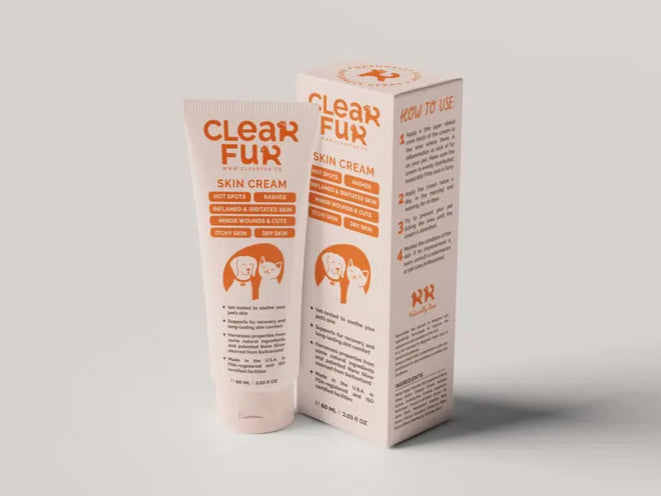
That’s where ClearFur Skin Relief Cream comes in. Our gentle, natural formula is designed to comfort, moisturize, and nourish dryness and flakiness, helping improve the look of your dog’s skin without antibiotics, steroids, or harsh chemicals.
And because we know dogs rarely leave an itchy spot alone, it’s lick-safe too. You can apply it directly to problem areas without worrying about the inevitable lick afterward. The formula even contains a pet-friendly taste deterrent to encourage them to leave it in place and give it time to work.
How do natural ingredients soothe dryness?
At the heart of ClearFur are four carefully chosen active ingredients: colloidal nano silver, African geranium, black elderberry and St. John’s Wort. Each brings something different to the formula, combining the power of nature with science to give uncomfortable skin the care it needs.
|
Ingredient |
What research says |
Why it’s useful for dry skin |
|
Colloidal nano silver |
Silver nanoparticles have been studied for their ability to help keep bacteria, fungi, and other microbes in check |
Helps support healthy-looking skin, especially in dry areas that can become more irritated through repeated scratching and licking |
|
Black elderberry |
Naturally rich in antioxidants, black elderberry has been studied for its protective and skin-supporting properties |
Nourishes dry skin and helps maintain its natural moisture barrier, leaving flaky areas looking more moisturized |
|
St. John’s wort |
Studies have explored its antioxidant, anti-inflammatory, and antimicrobial properties, as well as its use in topical skin care |
Helps calm the appearance of redness and irritation while conditioning dry, sensitive-looking skin and supporting its natural barrier |
|
African geranium |
Research has found that compounds in African geranium can act against certain bacteria, while the plant has a long history of traditional use |
Helps soothe and condition uncomfortable skin, keeping dry areas nourished and helping break the itch/scratch cycle |
Colloidal nano silver
Colloidal nano silver has been widely studied for its antimicrobial properties and potential uses in skincare, and has been used for topical relief throughout history. Research by Federica Paladini and Mauro Pollini found that silver nanoparticles can act against different types of bacteria and fungi by damaging their cells and disrupting the processes they need to survive. This makes silver particularly interesting for skin care, where keeping these microbes under control can help support the skin barrier.
Black elderberry
Because black elderberry (Sambucus nigra) is packed with antioxidants, research by Anna Przybylska-Balcerek et al. indicates it can help keep skin well-conditioned and support its natural barrier. Its nourishing properties can make your dog’s dry skin appear more moisturized, too.
St. John’s wort
St. John’s wort (Hypericum perforatum) has been used on the skin for centuries, with modern research helping explain why. Studies published by Ute Wölfle et al. suggest it can help calm redness and irritation, protect the skin from everyday stress, and help keep bacteria and other microbes in check, making it useful for soothing uncomfortable skin and supporting its natural barrier.
African geranium
African geranium (Pelargonium sidoides or umckaloabo) has been used traditionally to soothe irritated skin. According to O. Kayser and H. Kolodziej, compounds in the plant can help keep certain bacteria in check, while its soothing properties can help calm irritation. For dry skin, this means keeping the skin well-conditioned and healthier-looking while reducing itchiness that can lead to more scratching and flaking.
To find out more about each of our ingredients, read our deep dive on the science behind them.
How do I use ClearFur for my dog’s dry and flaky skin?
For dry, flaky, or irritated-looking areas, apply a thin layer of ClearFur Skin Relief Cream twice a day, ideally morning and evening, for at least 10 days. Clean and dry the area first so you’re applying the cream directly to the skin rather than dirt or debris caught in the coat.
Alongside this, make sure you don’t over-bathe your pooch and use gentle products designed specifically for dogs. Keep up with your usual flea and parasite prevention too, since parasites are one of the common causes veterinarians investigate when a dog develops itching or skin changes.
Most importantly, don’t ignore skin that’s getting worse. Persistent dryness, severe itching, broken skin, hair loss, odor, discharge, or recurring flare-ups deserve veterinary attention so you can find out what’s driving the problem.
Helping your dog feel comfortable in their skin
Dry, flaky skin can be uncomfortable for your dog, but there’s plenty you can do to help. Paying attention to changes, figuring out what might be behind the dryness, and giving their skin some extra care can all help keep them comfortable.
And when their skin needs a little extra TLC, ClearFur offers a natural, antibiotic- and steroid-free way to soothe, moisturize, and nourish dry skin, without harsh chemicals.
Frequently asked questions about dry skin in dogs
What can I put on my dog’s dry, flaky skin?
ClearFur Skin Relief Cream is designed to moisturize, nourish, and soothe dry, irritated-looking skin. Our lick-safe formula combines colloidal nano silver, African geranium, black elderberry, and St. John’s Wort, with no antibiotics or steroids.
Why does my dog suddenly have dandruff?
Dog dandruff can have several causes, including environmental changes, parasites, allergies, and underlying skin conditions. If it appears suddenly, is accompanied by significant itching, redness, hair loss, or odor, or doesn’t clear up, ask your veterinarian to take a look.
Can allergies cause dry, flaky skin in dogs?
Environmental and food allergies can make dogs itchy, and repeated scratching can lead to scaling, scabbing, and hair loss. Because several different problems can look similar on the skin, recurring symptoms are best assessed by a veterinarian.
Should I bathe my dog if they have dry skin?
You can bathe a dog with dry skin, but gentle is the key word. Avoid frequent washing or harsh products and choose a mild cleanser made for dogs, as repeated washing can make already-dry skin feel worse.
When should I take my dog to the vet for dry skin?
Speak to your veterinarian if the dryness persists, keeps returning, becomes more severe, or comes with significant itching, redness, sores, hair loss, odor, or discharge. Dry, flaky skin is a symptom rather than a diagnosis, so ongoing problems may need investigation to find the underlying cause.
Resources
https://www.akc.org/expert-advice/health/dry-skin-on-dogs/
https://www.petmd.com/dog/symptoms/dry-flaky-skin-dogs
https://warrickvet.com/blog/dry-skin-on-dogs/
https://www.petmd.com/dog/conditions/skin/walking-dandruff-dogs
https://pubmed.ncbi.nlm.nih.gov/34068909/
https://pubmed.ncbi.nlm.nih.gov/24214835/
https://pubmed.ncbi.nlm.nih.gov/31404974/
https://pubmed.ncbi.nlm.nih.gov/9434601/