There’s a chill in the air, the leaves are changing, and suddenly, your pet can’t stop scratching.
If you notice your furry friends licking their paws or nibbling, or their skin looking irritated as summer comes to an end, the change of season could be to blame. As summer turns to fall, changes in the weather, environment and daily routine can bring new challenges for sensitive skin. That means a pet who’s been comfortable all summer might suddenly seem a little more bothered by their skin.
From the seasonal triggers behind the scratching to the signs that your pet’s skin needs a little more attention, let’s dive into what’s going on during fall and what you can do to help keep them comfortable.
What triggers pet skin allergies in the fall?
Pet skin allergies can flare up in the fall because seasonal change brings a different mix of potential allergens. Late-season pollen can still be hanging around, while wetter weather means more mold spores from damp leaves and decaying plants. At the same time, pets often start spending more time indoors, where dust mites and other household allergens can become a bigger part of the picture.
If your pet is sensitive to one or more of these triggers, their skin can react, leaving them itchier, more irritated, and more likely to scratch, lick, or chew. That’s why a pet who seemed perfectly comfortable through summer can suddenly start scratching as the leaves begin to fall.
Some pets are more sensitive to things in their environment, which can make their skin more likely to react at certain times of year. Research from the International Committee on Allergic Diseases of Animals (ICADA) suggests that both a pet’s surroundings and their natural tendency to develop allergies can play a part in allergic skin conditions such as canine atopic dermatitis.
When fall does arrive, there are a few common triggers that are most likely to cause problems for sensitive pets:
-
Pollen
-
Mold
-
Fall plants like ragweed
-
Dust mites
-
Ticks eager to stay warm
-
Extra fleas
These triggers can affect pets in different ways, so it helps to know what changes in their skin and behavior to look out for.
What are the signs of a skin reaction?
If your pet’s skin is reacting to something, you’ll probably notice them scratching, licking, or nibbling themselves more than usual. You might also spot changes in their skin or coat, especially in the areas they keep going back to.
Keep an eye out for:
-
Scratching more than usual
-
Licking or chewing their paws or skin
-
Rubbing their face or body against furniture
-
Red or irritated-looking skin
-
Dry or flaky patches
-
Thinning fur from repeated scratching or licking
-
Sore-looking patches or hot spots
-
Shaking their head or scratching their ears more often
-
Changes in how their skin looks or feels
Every pet has a scratch now and then. But if yours suddenly can’t seem to leave one spot alone, or you’re noticing changes to their skin or coat, it’s worth keeping a closer eye on it. Persistent itching can have several causes, so if you’re worried or it isn’t settling down, speak to your veterinarian.
When is it more than seasonal itching?
It could be more than seasonal itching if your pet seems really uncomfortable, their skin is becoming sore, or the problem just isn’t going away.
A little scratching now and then is completely normal. But if your pet is scratching, licking, or nibbling themselves constantly, or you’re starting to notice bigger changes in their skin, it’s a good idea to check in with your veterinarian.
Watch out for:
-
Broken, bleeding or weeping skin
-
Noticeable hair loss
-
Swelling or widespread redness
-
An unusual smell or discharge
-
Skin that feels unusually warm
-
Scratching, licking or biting that won’t settle down
-
Ear problems that keep coming back
-
Changes in their appetite, energy or usual behavior
-
Skin problems that continue beyond fall or keep returning
If in doubt, it’s always best to check with your vet.
Why does itching often get worse over time?
Itching can get worse because scratching and licking make already sensitive skin even more irritated.
It can quickly turn into a cycle. Your pet feels itchy, so they scratch or lick. That bothers the skin even more, which makes them want to keep scratching. It’s a bit like when you scratch a bug bite; it might feel better for a moment, but the more you scratch, the more irritated it gets.
But don’t worry, there’s plenty you can do to break the cycle and give your pet the care they deserve.
How can I help relieve skin discomfort for my pet?
You can help relieve seasonal skin discomfort by limiting your pet’s exposure to allergens and gently caring for their skin when it becomes irritated.
To start with, try wiping your pet’s paws and coat after walks or after they’ve been outside. Make sure you wash their bedding regularly and clear away any piles of damp leaves from the places they like to explore.
Gentle bathing and grooming can help wash away things they’ve picked up outside too. Just be careful not to overdo it, as too much bathing can dry out their skin and make it feel even more uncomfortable.
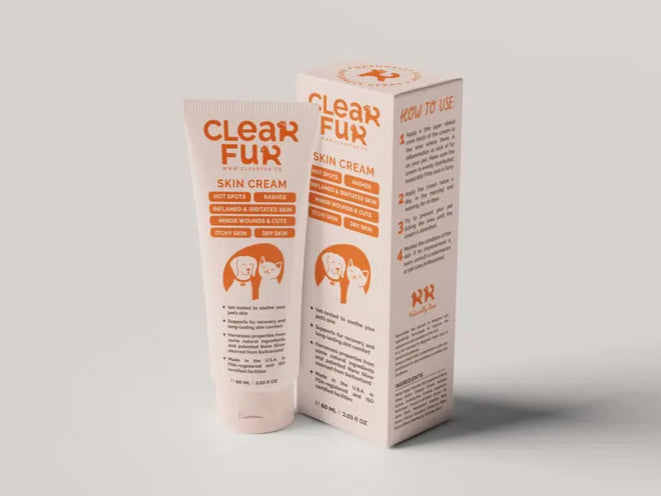
You can also choose something gentle and natural that soothes and nourishes your pet’s skin without relying on antibiotics. Free from harsh chemicals and antibiotics, our Skin Relief Cream is designed to relieve discomfort and improve the appearance of irritated skin, including pets affected by seasonal allergies.
What natural ingredients can soothe my pet’s skin?
Natural ingredients have been clinically proven to have properties that help soothe, nourish, and care for your pet’s skin, all without the use of antibiotics and harsh chemicals.
We’ve carefully selected four key natural ingredients to power our comforting formulas: colloidal nano silver, African geranium, black elderberry, and St. John’s wort.
Each ingredient brings something different. Colloidal nano silver has been studied for its antimicrobial properties, while African geranium has shown antibacterial and antifungal activity in laboratory research. Black elderberry is rich in antioxidants and has been studied for its effects on skin inflammation, while St. John’s wort has research behind its soothing, anti-inflammatory, and antimicrobial properties.
|
Ingredient |
What research tells us |
How it works in ClearFur |
|
Colloidal nano silver |
Before antibiotics, silver was one of the most important ingredients used to protect and soothe the skin |
Supports skin hygiene and complements the botanical ingredients |
|
African geranium (Pelargonium sidoides or umckaloabo) |
Used in traditional herbal remedies, African geranium is rich in compounds that protect against environmental stress and harmful microbes |
Comforts and nourishes, contributing to healthier-looking skin and coats |
|
Black elderberry (Sambucus nigra) |
Packed with antioxidants, black elderberry also has antimicrobial and anti-inflammatory properties |
Protects against environmental stressors and boosts skin barrier health |
|
St. John’s wort (Hypericum perforatum) |
St. John’s wort has antioxidant, anti-inflammatory, and antimicrobial properties |
Supports the skin’s natural barrier, making it a useful ingredient for soothing, conditioning, and caring for sensitive or irritated-looking skin |
Together, our natural ingredients offer a gentle, lick-safe way to comfort your pet’s irritated skin in the face of seasonal allergies, supporting healthy-looking skin without antibiotics or steroids. You can read more about the science behind each of our ingredients in our ingredient story blog.
How do I use ClearFur to soothe seasonal allergies?
To care for seasonal skin discomfort, keep your pet’s skin clean and comfortable, reduce their exposure to allergens where you can, and use ClearFur regularly on irritated areas.
When their skin needs a little extra care, apply a thin layer of ClearFur Skin Relief Cream twice a day, ideally morning and evening, for at least 10 days.
Gently clean and dry the area first, then smooth a small amount of cream over the skin and massage it in. ClearFur is lick-safe, so there’s no need to worry if your pet sneaks in a lick (although keeping licking to a minimum gives the cream more time to sit on their skin).
Keep up the little things too, like wiping their paws after walks and washing their bedding regularly. And if their skin gets worse, irritation keeps coming back, or something just doesn’t seem right, have a chat with your veterinarian.
Helping your pet’s skin discomfort during the fall
Fall can bring a few extra challenges for sensitive skin, but there’s plenty you can do to help your pet feel more comfortable. Keeping an eye out for changes, cutting down their exposure to seasonal triggers, and giving irritated skin a little extra care can all make a difference.
And when their skin does start bothering them, you have options. ClearFur gives you a natural, antibiotic- and steroid-free way to soothe and nourish their skin, without harsh chemicals.
Because crunchy leaves are for jumping in, not scratching over.
Frequently asked questions about pet skin allergies in the fall
Can dogs and cats get seasonal allergies in the fall?
Yes. Pets can react to environmental allergens, and exposure can change with the seasons. Fall triggers can include pollen, mold, and indoor allergens such as dust mites, so a pet that seems comfortable for much of the year may become itchier as the seasons turn.
Why is my dog suddenly scratching so much in the fall?
A seasonal change in scratching can be linked to environmental triggers such as late-season pollen or mold, but itching has many possible causes. If your pet’s scratching is persistent, severe, or causing skin damage, ask your veterinarian to investigate rather than assuming it’s seasonal.
How can I reduce allergens on my pet after a walk?
Wiping your pet’s paws, legs, and coat with a damp, pet-safe cloth after outdoor time can help physically remove pollen and other material they’ve picked up. Regularly washing bedding and keeping their favorite indoor spaces clean can also reduce exposure.
What can I use to soothe my pet’s skin?
ClearFur Skin Relief Cream can help soothe, moisturize, and nourish irritated skin using natural ingredients, with no antibiotics, steroids, or harsh chemicals. It’s also lick-safe, making it a gentle option for everyday skin care.
Can I use ClearFur if my pet licks their skin?
Yes, of course. ClearFur is formulated to be lick-safe. It’s still best to discourage excessive licking where possible, as your pet may remove the cream before it has had time to sit on the skin
When should I take my itchy pet to the vet?
See your veterinarian if itching is severe, persistent, or keeps returning, or if you notice broken skin, discharge, swelling, a strong odor, significant hair loss, or changes in your pet’s behavior. Allergies aren’t the only cause of itchy skin, so persistent symptoms need a proper diagnosis.